

Bromélia Carolina - Espécies do bosque do laboratório | Blushing Bromeliad - Species of the Laboratory Grove
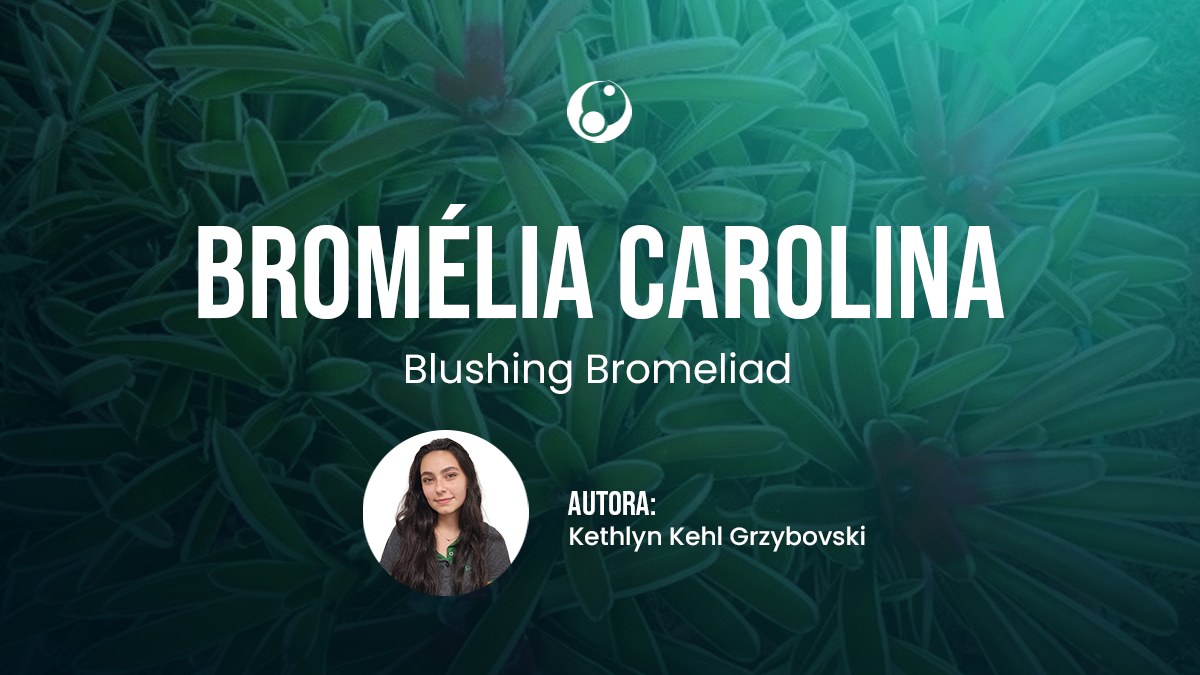

A Neoregelia carolinae é uma bromélia conhecida pela beleza ornamental e por uma característica muito curiosa: o centro da planta pode adquirir coloração avermelhada, especialmente próximo ao período de floração. Por isso, em alguns lugares, ela é lembrada como uma bromélia que parece “ficar corada”.
Suas folhas formam uma roseta capaz de acumular água, criando pequenos reservatórios naturais. Neles, podem viver micro-organismos, larvas de insetos e outros pequenos seres associados à umidade. Assim, mesmo uma planta aparentemente decorativa pode funcionar como um ponto de abrigo e interação dentro do bosque.
No bosque do laboratório, essa espécie contribui tanto para a beleza do espaço quanto para a biodiversidade local. Ela ajuda a mostrar que as bromélias não são importantes apenas pela aparência: elas participam da dinâmica do ambiente, conectando água, sombra, animais e pequenos organismos em uma única estrutura viva.
A coloração avermelhada no centro da roseta pode estar relacionada ao período reprodutivo da planta, destacando a região onde surgem as flores.
Autora:
Kethlyn Kehl Grzybovski - Técnica de Laboratório
IN ENGLISH
The Neoregelia carolinae is a bromeliad known for its ornamental beauty and for a very curious characteristic: the center of the plant can develop a reddish coloration, especially close to the flowering period. For this reason, in some places, it is remembered as a bromeliad that appears to “blush.”
Its leaves form a rosette capable of storing water, creating small natural reservoirs. Within them, microorganisms, insect larvae, and other small beings associated with humid environments can live. Thus, even a seemingly decorative plant can function as a point of shelter and interaction within the woodland.
In the laboratory’s woodland, this species contributes both to the beauty of the space and to local biodiversity. It helps demonstrate that bromeliads are important not only for their appearance: they participate in the dynamics of the environment, connecting water, shade, animals, and small organisms within a single living structure.
The reddish coloration in the center of the rosette may be related to the plant’s reproductive period, highlighting the region where the flowers emerge.
Author:
Kethlyn Kehl Grzybovski - Laboratory Technician